In a world where almost everything can be produced quickly, handmade work follows a different rhythm.
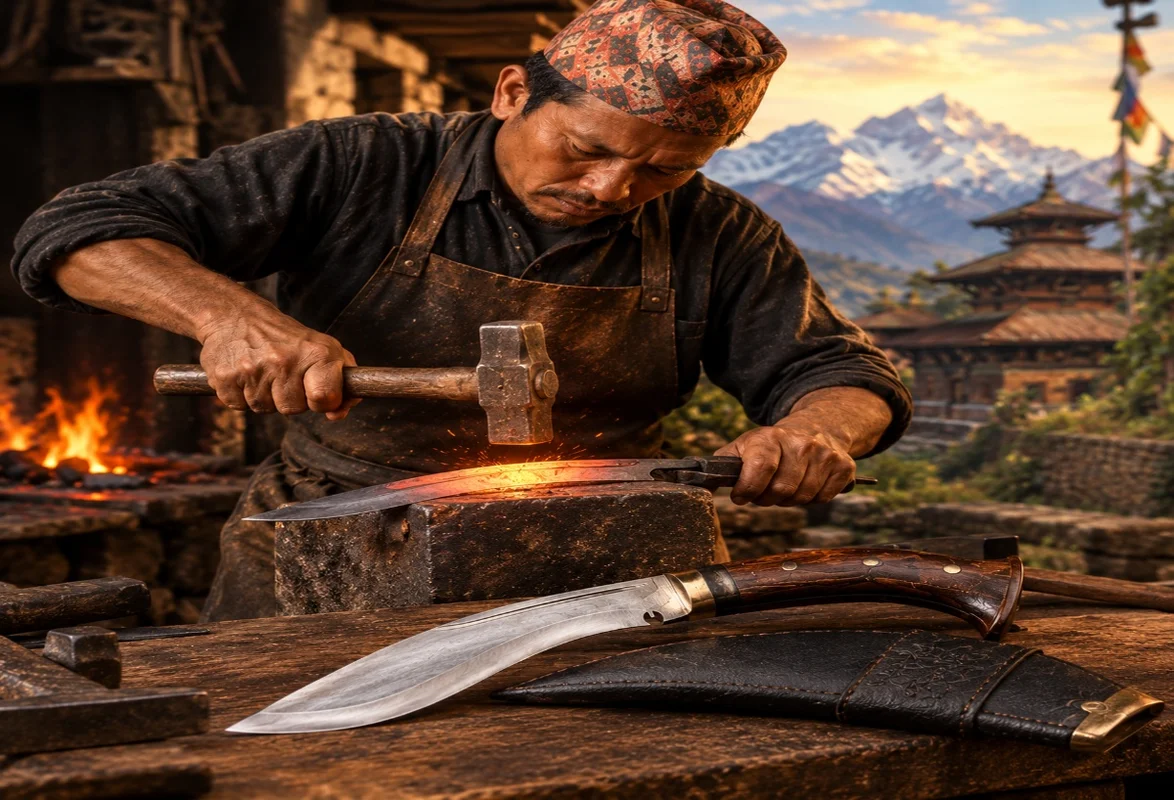
A traditional Khukuri is not simply a product that appears at the end of an assembly line. Its shape, strength, balance and character develop through a series of careful processes. Forging, heating, hammering, shaping, grinding, fitting the handle and finishing the piece all require attention.
And sometimes, the most important part of making a traditional Khukuri is knowing when not to hurry.
At Kathmandu Forge, https://www.kathmanduforge.com/ we believe that patience is part of the craftsmanship.
A handmade Khukuri takes time because the maker is working with material, heat, tools and experience—not simply following a machine-controlled production cycle.
What Makes a Khukuri Handmade?
The word "handmade" can mean different things depending on the product.
For a traditional Khukuri, handmade craftsmanship involves a combination of skilled physical work and decisions made throughout the process.
The maker needs to work with the material rather than simply force it into a predetermined shape.
The blade gradually takes form through processes such as:
- Heating the steel
- Forging and hammering
- Establishing the characteristic curved profile
- Shaping the blade
- Grinding and refining the surfaces
- Heat treatment
- Creating the edge
- Fitting the handle
- Finishing the Khukuri
- Preparing the sheath
Every stage affects the next.
That is one reason handmade work cannot always be measured simply by asking, "How quickly can it be finished?"
A better question is:
"How carefully can it be made?"
The First Lesson Is Patience
Traditional metalworking begins with heat.
The steel must reach a workable temperature before the maker can shape it effectively. The process requires observation and experience rather than simply counting minutes.
Once the steel is heated, hammering begins.
Strike by strike, the maker works toward the desired shape.
The distinctive curve of a Khukuri does not happen by accident. It is part of the traditional form that makes the knife immediately recognizable.
But forging is not simply about hitting the metal harder or faster.
It is about knowing where to work, how much to work, and when to stop.
Too much rushing can affect the consistency of the work. Too little attention can leave unwanted imperfections that become harder to correct later.
Why Hammering Takes Time
When people see a blacksmith making a Khukuri, the hammering is often the part that catches their attention.
It looks powerful.
But behind that visible strength is considerable control.
The maker is working toward more than a rough blade shape. The blade needs to develop its intended profile and proportions while leaving enough material for later shaping and finishing.
This is where patience becomes part of the craft.
The maker cannot simply say:
"The blade looks close enough. Let's finish it."
A handmade Khukuri moves through several stages before it becomes the finished piece.
The work is gradual.
The blade is shaped.
Then examined.
Then refined.
Then examined again.
That repeated process is one of the differences between handmade craftsmanship and mass production.
Heat Treatment Requires Care
One of the most important stages in making a Khukuri is heat treatment.
The properties of steel are influenced by how it is heated and cooled. Traditional makers therefore need to approach this stage carefully.
The exact methods used can vary between workshops and individual craftsmen, and modern makers may use different techniques and equipment.
What matters is that heat treatment is not a stage that should be rushed simply to finish an order faster.
The blade has already taken considerable work to forge and shape. A mistake during an important thermal process can affect the final result.
This is another reason handmade Khukuri production requires patience.
The Shape Comes Before the Shine
A polished blade can look impressive in photographs.
But the appearance of a finished Khukuri begins much earlier.
Before polishing and finishing, the maker needs to establish the blade's overall shape.
The curved profile, spine, edge and other details must come together into a coherent form.
Grinding and finishing then refine the surface.
This is one reason we believe that a handmade Khukuri should not be judged only by how shiny it looks.
A beautiful finish is important, but it is only one part of the process.
The craftsmanship starts underneath the surface.
Handmade Does Not Mean Perfectly Identical
One of the characteristics of handmade products is that no two pieces are necessarily identical. Small variations in surface texture, handle grain and finishing can give each handmade Khukuri from Nepal its own individual character.
A machine can produce thousands of objects with extremely consistent dimensions.
A handmade Khukuri can have small variations in:
- Surface texture
- Hammer marks
- Blade finish
- Handle grain
- Sheath appearance
- Minor dimensions
These variations are not automatically defects.
They can be part of the individual character of a handmade object.
For customers purchasing a traditional Khukuri, this distinction is important.
A handmade piece should be appreciated as an individually crafted product rather than expected to look exactly like a factory-produced item.
Why Rushing Can Change the Craft
When a customer orders a handmade Khukuri, it is natural to want it as soon as possible.
We understand that.
At Kathmandu Forge, we understand that customers want their orders delivered as quickly as possible. At the same time, our story and approach to traditional Khukuri craftsmanship are rooted in the belief that careful handmade work should not be rushed.
But there is a difference between efficient craftsmanship and rushed craftsmanship.
An efficient craftsman knows the process and works carefully without unnecessary delays.
A rushed craftsman is working primarily against the clock.
Those are not necessarily the same thing.
Traditional craftsmanship deserves enough time for each stage to be completed properly.
That is why a handmade Khukuri may require more time than a mass-produced knife.
The extra time is not simply waiting.
It is part of the work.
From Steel to Something With Character
There is also something intangible about handmade objects.
A mass-produced product may be consistent, but a handmade Khukuri carries evidence of the process that created it.
You can see it in the surface.
You can sometimes see subtle variations in the handle.
You can recognize the traditional curved profile.
The finished Khukuri tells a story about the hands, tools and process behind it.
That is what makes handmade craftsmanship interesting to collectors and people who appreciate traditional products.
The Khukuri Is More Than Its Blade
The traditional Khukuri is strongly associated with Nepal and is recognized around the world for its distinctive curved shape.
But its identity is not limited to the blade.
The handle, sheath, proportions and overall construction contribute to the character of the finished piece.
Traditional Khukuri craftsmanship therefore involves several different skills.
The blade needs attention.
The handle needs attention.
The sheath needs attention.
And the final product needs to come together as one object.
That takes time.
Why Handmade Khukuri Can Take Longer Than Expected
When ordering a handmade Khukuri, customers may sometimes wonder why production cannot simply be completed in a day or two.
There are several reasons.
1. Each piece requires physical work
Hand-forging and shaping require repeated steps.
2. Materials need to be worked carefully
Steel cannot always be treated like a material that can simply be cut into shape instantly.
3. Heat treatment requires attention
Important stages should not be hurried merely to meet an artificial deadline.
4. Finishing takes additional time
Grinding, polishing, handle fitting and other finishing work come after the initial forging.
5. Handmade orders may be produced individually
Unlike factory production, a traditional workshop may be working on several different pieces at different stages.
For these reasons, production time can vary.
Patience Is Part of the Value
When you purchase a handmade Khukuri, you are not only paying for the raw material.
You are also paying for:
Time.
Skill.
Craftsmanship.
Experience.
Attention to detail.
Traditional knowledge.
The steel itself is only one part of the finished product.
The value of handmade work comes from what the craftsman does with it.
Why We Don't Want to Rush the Process
At Kathmandu Forge, we understand that customers want their orders delivered as quickly as possible.
We do too.
But we also believe that handmade craftsmanship deserves enough time to be done carefully.
Our goal is not simply to produce a Khukuri as quickly as possible.
Our goal is to create a piece that reflects the traditional character of the Khukuri while maintaining careful attention throughout the making process.
Sometimes that means waiting a little longer.
And that is the price of patience.
A Handmade Khukuri Is Made One Step at a Time
From heated steel to forged blade, from rough shape to refined surface, from handle fitting to final finishing, a traditional Khukuri develops gradually.
There is no single moment when it suddenly becomes a finished product.
It happens through many small stages.
Each stage matters.
Each stage takes time.
And that is what makes handmade craftsmanship different.
A machine can repeat a process quickly. A craftsman must work through the process carefully.
That patience is not a weakness of traditional craftsmanship.
It is part of its value.
Final Thoughts
In today's fast-moving world, patience can sometimes feel like an inconvenience.
But traditional craftsmanship reminds us that some things are worth taking time over.
A handmade Nepalese Khukuri is the result of many stages of work, from forging and shaping to finishing and assembly. Its individuality comes from the process itself.
So when you see a handmade Khukuri, don't only look at the finished blade.
Think about the time behind it.
The heat.
The hammer.
The shaping.
The finishing.
The hands that worked on it.
And the patience required to turn a piece of steel into something with the distinctive character of a traditional Khukuri.
Because when craftsmanship is handmade, time is not simply part of the process. Time is part of the product.
Categories
Recent Posts
 Featured
 Featured
 Featured
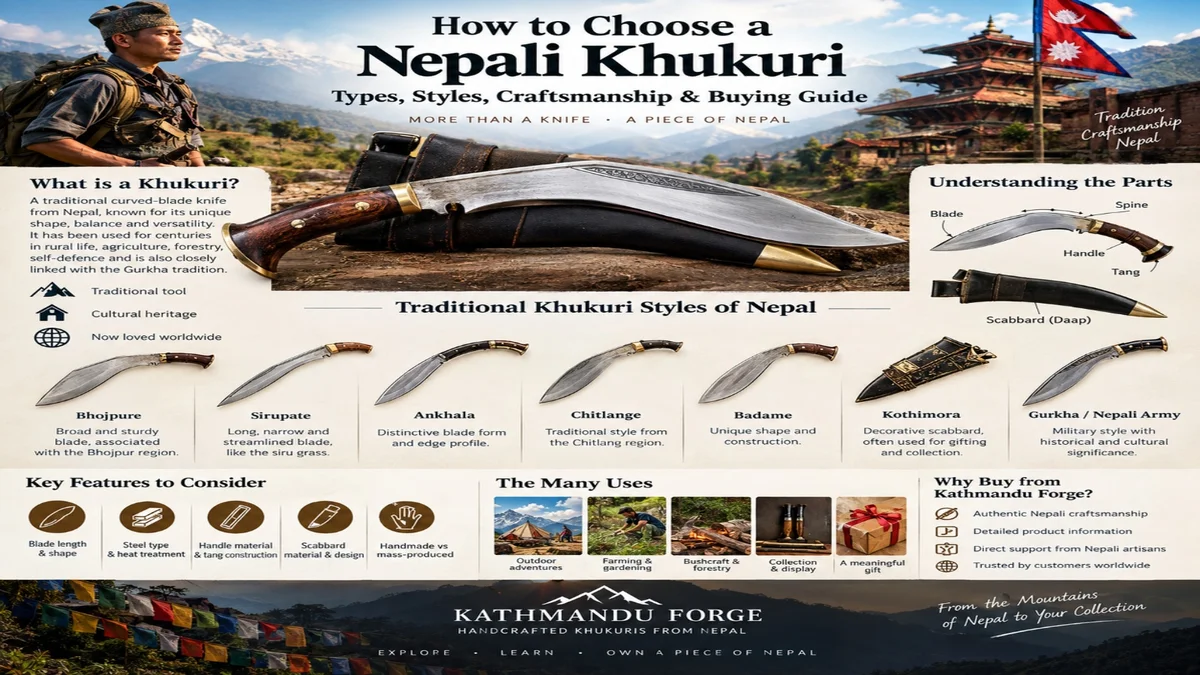
How to Choose a Traditional Nepali Khukuri: A Complete Guide to Styles, Craftsmanship, Uses and Buying
Sep 22, 2026
Read Post